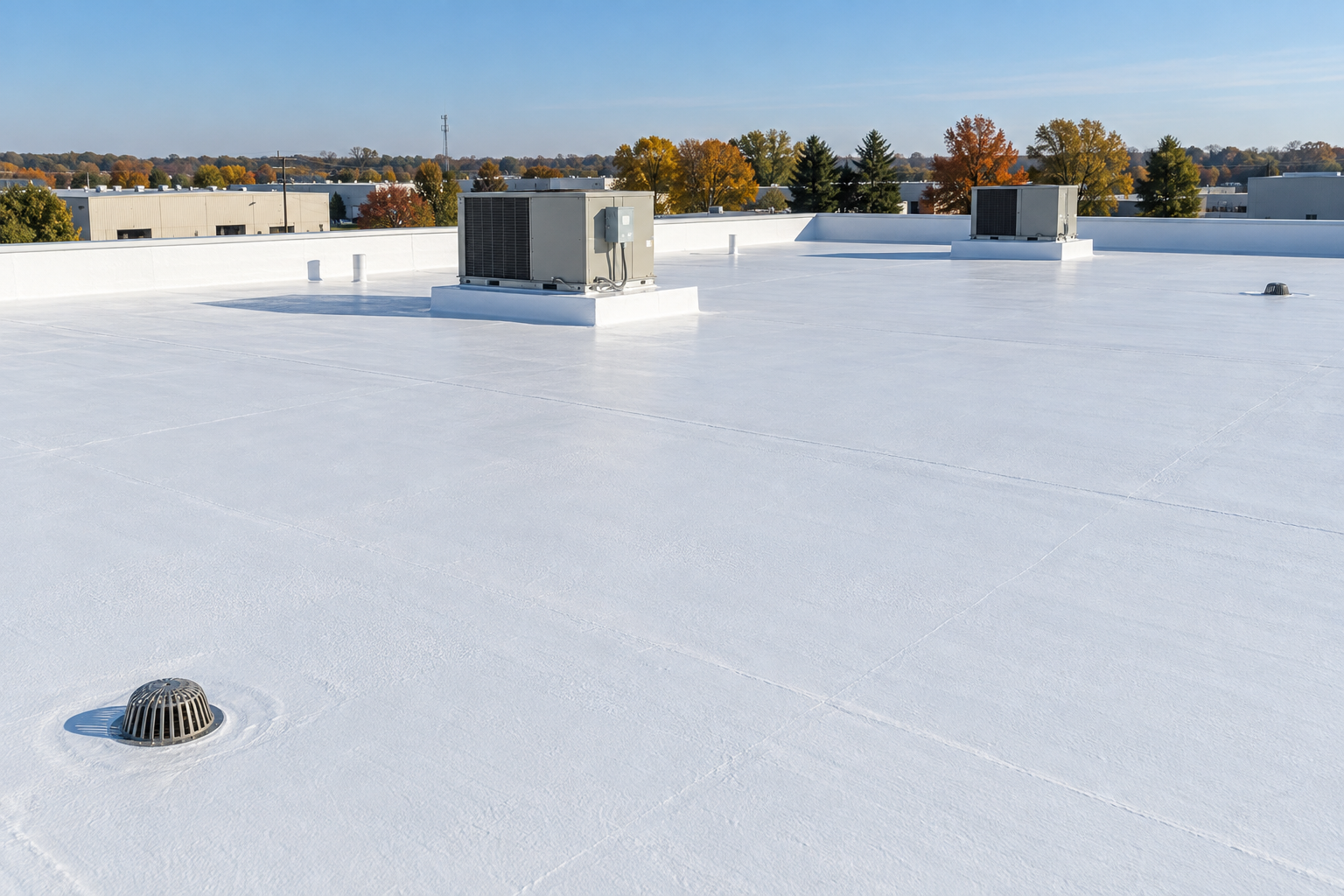
An aging roof does not always mean it is time for a complete replacement. For some Columbus-area property owners, silicone spray coating offers another option: restoring a suitable existing roof with a protective coating system.
The key word is suitable. Before comparing prices, you need to know whether the roof beneath the coating is worth preserving.
What Is Silicone Roof Spray Coating?
Silicone roof coating is a liquid-applied material that cures into a continuous protective membrane. ACI Construction & Restoration specializes in silicone coating for roof restoration, including eligible flat, low-slope, and metal roofing systems.
The coating is part of a restoration project. Inspection, surface preparation, and repairs come before the finished protective layer.
Is Your Roof a Good Candidate?
Start with an assessment of the existing roof assembly. Extensive damage or wet insulation can make replacement more appropriate than coating. The condition of the underlying materials matters as much as the visible surface.
Compatibility also needs to be checked. Manufacturer guidance calls for adhesion testing to confirm that a proposed coating will bond to the prepared roof. Ask your contractor how the selected system addresses your particular roof material and any previous coatings.
- What is the condition of the roof beneath the surface?
- Is there evidence of trapped moisture or damaged insulation?
- Which repairs are needed before coating can begin?
- How will compatibility and adhesion be verified?
Why Consider Restoration Before Replacement?
For an eligible roof, restoration may reduce the amount of material that needs to be removed and preserve roofing that still has useful service life. ACI offers spray coating for both residential and commercial properties.
That makes it worth discussing when you are planning work on a low-slope addition, a commercial building, or another potentially compatible roof. Ask for an explanation of why restoration fits your building, along with the circumstances that would favor replacement.
Can a Reflective Coating Lower Cooling Costs?
A reflective roof surface can reduce solar heat absorption. However, a cooling-cost benefit is not the same as a guaranteed reduction in your total annual energy bill.
The U.S. Department of Energy explains that savings depend on factors including climate, insulation, roof type, and heating and cooling equipment. For an Ohio property, evaluate the building's year-round needs rather than relying on a single savings percentage.
What Should the Project Include?
ACI describes a process that begins with inspection, moves through cleaning and necessary repairs, and finishes with coating application, final inspection, and documentation.
Before approving a proposal, ask for a written scope that makes the following points clear:
- Preparation: What cleaning, repairs, and any required primer are included?
- Coating system: Which product will be used, and what application requirements apply?
- Project logistics: How will roof access, equipment, and nearby property be managed?
- Weather: What conditions are required for application and curing?
- Closeout: What inspection records, maintenance instructions, and warranty documents will you receive?
Compare the Complete Scope, Not Just the Price
When reviewing estimates, place preparation, repair allowances, coating specifications, and warranty terms side by side. If one proposal leaves something out, ask whether it is unnecessary for your roof or simply excluded from the price.
Discuss ongoing maintenance and future inspection needs, too. An expected service life and a written warranty are different things; ask what each means for the system being proposed.
Find Out Whether Your Roof Can Be Restored
Explore ACI's silicone spray coating services or request a free roof inspection and estimate. You can also call (614) 698-9777 to discuss your property.
Start with the roof's condition, then choose the solution that fits.
Further reading: Roof coating suitability, manufacturer guidance on adhesion testing, and Department of Energy guidance on reflective roofs.