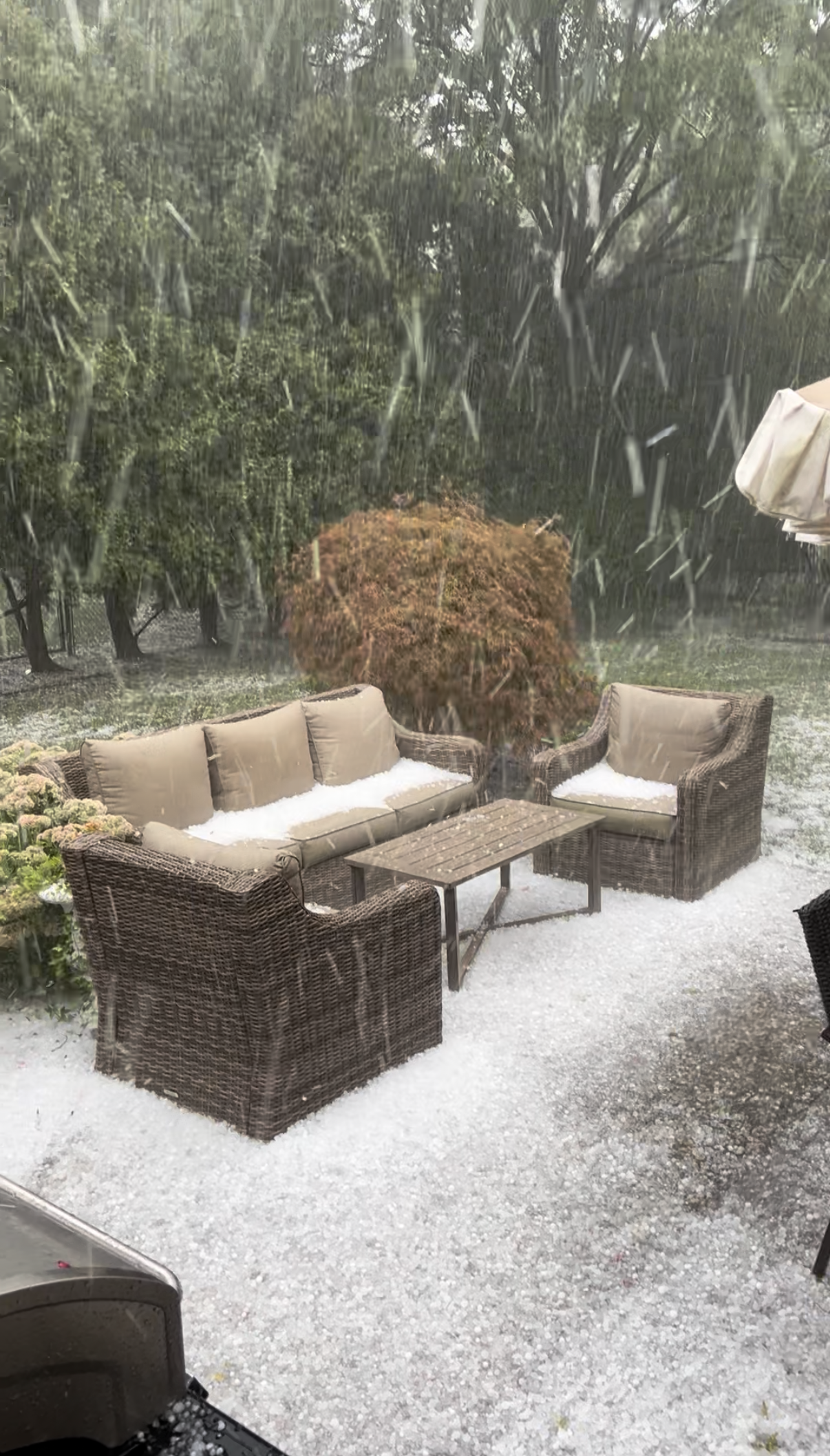
Hailstorms can do more than leave a few marks on your roof. Even small hail can reduce the life of your shingles and create problems that may not show up for months or even years. Many homeowners assume that if their roof is not leaking after a storm, everything is fine. Unfortunately, hail damage often shortens the lifespan of a roof long before leaks appear.
What Hail Actually Does to Roof Shingles
Asphalt shingles are designed to protect your home from water, wind, and sun exposure. When hail hits a roof, it can bruise the shingle, crack the mat, or knock off protective granules. These granules are extremely important because they protect the asphalt layer from UV rays and weather exposure.
When granules are knocked off by hail impact, the asphalt underneath is exposed to the sun. This causes the shingle to dry out, become brittle, and age much faster than normal. Over time, this leads to cracking, curling, and eventually leaks.
Granule Loss and Premature Aging
One of the most common types of hail damage is granule loss. You may notice this as:
- Granules in your gutters
- Bare spots on shingles
- Dark impact marks on the roof
- Shingles that look shiny or smooth in small areas
When shingles lose granules, they are no longer fully protected. This can reduce the life of your roof by several years depending on the severity of the damage.
Bruising and Hidden Damage
Hail does not always crack shingles right away. Sometimes it causes what roofers call a bruise. This happens when the impact weakens the fiberglass mat inside the shingle. The shingle may look fine from the ground, but the structure of the shingle has been compromised.
Over time, these bruised areas can turn into cracks and leaks, especially after hot summers and cold winters where the roof expands and contracts.
How Hail Damage Shortens Roof Life
A roof that should last 25 to 30 years may only last 15 to 20 years after a significant hail storm. Hail damage accelerates:
- Granule loss
- UV deterioration
- Shingle cracking
- Water penetration
- Roof aging
This is why many insurance companies approve roof replacements after hail storms, even when the roof is not leaking yet. The damage reduces the roof's useful life and ability to protect the home.
Signs Your Roof May Have Hail Damage
- Dents on gutters, downspouts, or metal vents
- Granules collecting in gutters
- Dark spots or impact marks on shingles
- Torn or cracked shingles
- Neighbors getting new roofs after a storm
If you notice any of these signs after a storm, it is a good idea to have a professional roof inspection.
Why a Roof Inspection After Hail Matters
Hail damage is not always obvious, but it can significantly shorten the life of your roof. Catching damage early can help you file an insurance claim, prevent leaks, and protect the value of your home.
If your home has experienced a hail storm recently, schedule a roof inspection here and we can determine whether your roof has damage and how much life your shingles have left.